
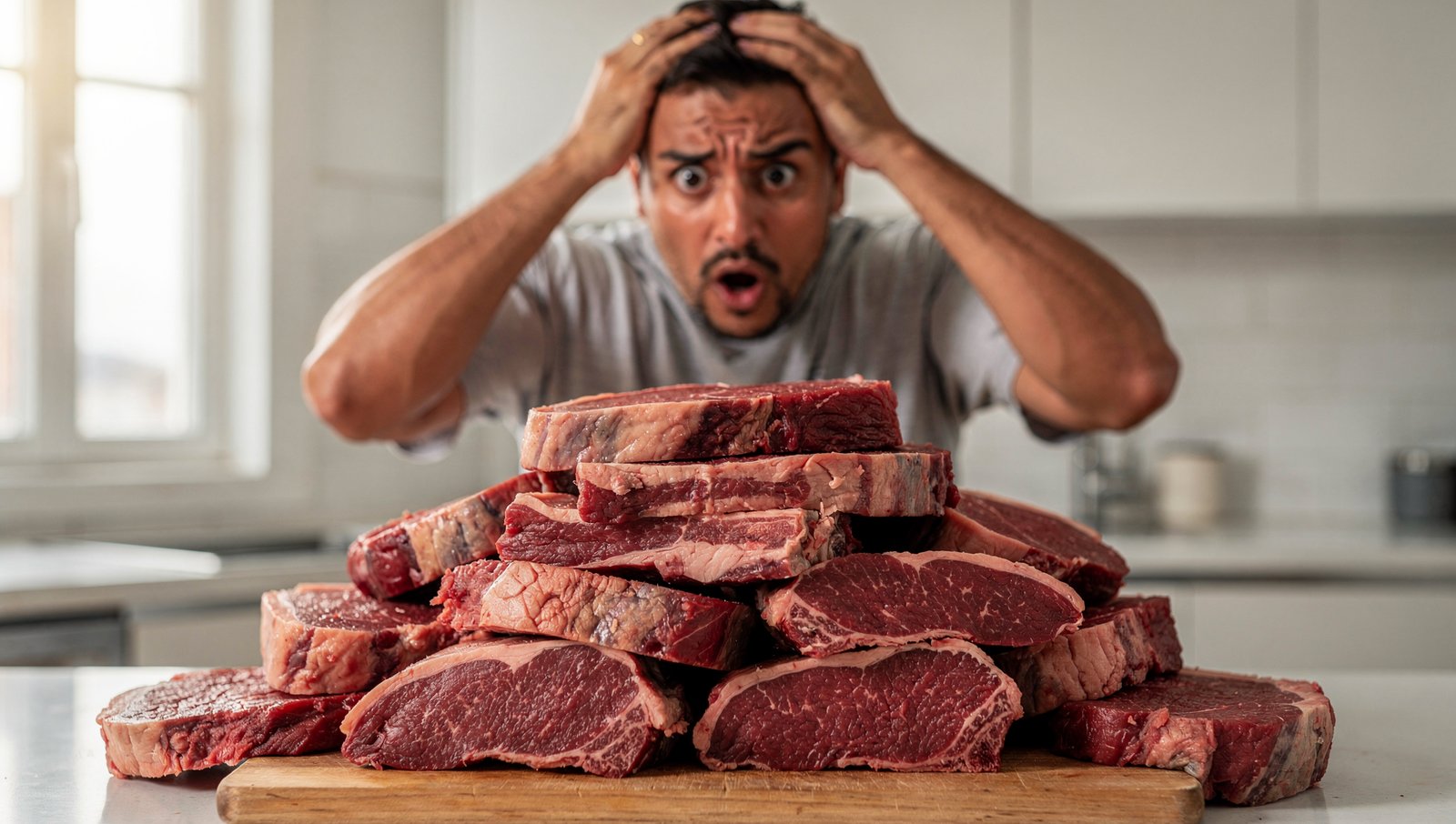
Despite its importance in muscle physiology, carnosine obtained from dietary sources is rapidly degraded by serum carnosinase, limiting its bioavailability.
A Scientific Look at Absorption, Enzymes, and Real-World Limitations
Carnosine is one of the most important molecules in human performance, recovery, and long-term tissue health. It plays a central role in buffering acidity inside muscle cells, protecting against oxidative stress, and slowing cellular aging processes such as glycation.
Given its importance, a natural question arises: why not just get enough carnosine from food?
The short answer: human physiology makes that extremely difficult — and in most cases, practically impossible.
What Is Carnosine?
Carnosine is a dipeptide composed of beta-alanine and histidine, found primarily in:
- Skeletal muscle
- Brain tissue
- Cardiac tissue
Its key functions include:
- Intracellular pH buffering (reducing fatigue)
- Antioxidant activity
- Anti-glycation (protecting proteins from damage)
- Mitochondrial support
(Hipkiss, 2009; Boldyrev et al., 2013)
Dietary Sources of Carnosine
Carnosine is found almost exclusively in animal-based foods, particularly beef, chicken, and fish. Vegetarian and vegan diets contain virtually none. (Harris et al., 2006)
The First Limitation: Rapid Breakdown by Carnosinase
Even when carnosine is consumed, the body faces a major obstacle: the enzyme carnosinase (CN1), present in blood plasma and the digestive system.
Its function is to break down carnosine into its amino acid components before it can reach tissues.
What this means
- Very little intact carnosine survives digestion
- Most is degraded before entering circulation
- Even less reaches muscle tissue
(Gunasekera et al., 2000; Teufel et al., 2003)
Plasma Stability Problem
Studies show that orally consumed carnosine is rapidly hydrolyzed, blood levels rise only briefly (if at all), and clearance happens quickly.
Result: no sustained elevation in tissue carnosine levels. (Perim et al., 2019)
Why Athletes Use Beta-Alanine Instead
Because direct carnosine intake is ineffective, sports science shifted toward beta-alanine supplementation. Beta-alanine bypasses carnosinase and allows the body to slowly synthesise carnosine inside muscle cells.
However, this comes with limitations:
- Time — requires 4–12 weeks of consistent loading
- Variability — response varies widely between individuals
- Side effects — commonly causes paresthesia (tingling)
(Hobson et al., 2012; Saunders et al., 2017)
The Practical Reality of Food Intake
To meaningfully elevate muscle carnosine through diet alone, you would need extremely high and consistent intake of meat, daily, at levels that are impractical for most people. Even then, carnosinase still limits how much reaches tissue.
Age-Related Decline
Carnosine levels naturally decline with age through reduced synthesis capacity, increased degradation, and lower muscle concentrations. This contributes to reduced muscle performance, slower recovery, and increased oxidative stress. (Babizhayev et al., 2012)
Dietary Gaps in Modern Lifestyles
Modern nutrition patterns further reduce carnosine availability: lower red meat consumption, increased plant-based diets, processed food intake, and high stress and metabolic demand.
Result: most people operate below optimal carnosine levels.
Key Scientific Takeaways
- Carnosine is critical for muscle function and recovery (Hipkiss, 2009)
- It is rapidly broken down by carnosinase (Teufel et al., 2003)
- Oral intake does not effectively raise tissue levels (Perim et al., 2019)
- Beta-alanine is used instead — but requires long loading periods (Hobson et al., 2012)
- Levels decline with age and lifestyle factors (Babizhayev et al., 2012)
Final Perspective
Carnosine isn't just another nutrient. It's a limiting factor in performance, recovery, and cellular health — and one that the body struggles to maintain through diet alone.
The issue isn't awareness. The issue is delivery.
For decades, science has understood the importance of carnosine — but practical ways to maintain or elevate levels in human tissue have remained limited. That's why current research and innovation in delivery methods continues to be an area of growing interest.
References
- Hipkiss AR. (2009). Carnosine and its possible roles in nutrition and health. Advances in Food and Nutrition Research.
- Boldyrev AA et al. (2013). Carnosine as a natural antioxidant and geroprotector. Biochemistry (Moscow).
- Harris RC et al. (2006). The absorption of orally supplied beta-alanine and its effect on muscle carnosine synthesis. Amino Acids.
- Gunasekera S et al. (2000). Carnosinase activity and degradation of carnosine in human plasma.
- Teufel M et al. (2003). Sequence identification and characterization of human carnosinase. Journal of Biological Chemistry.
- Perim P et al. (2019). Can the skeletal muscle carnosine response to beta-alanine supplementation be optimized?
- Hobson RM et al. (2012). Effects of beta-alanine supplementation on exercise performance. Amino Acids.
- Saunders B et al. (2017). Beta-alanine supplementation to improve exercise capacity and performance.
- Babizhayev MA et al. (2012). Carnosine and aging-related disorders.